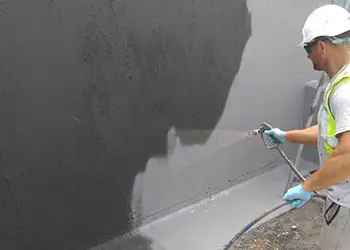
Damp Proof Course Installation

A damp-proof course installation is a new horizontal barrier in the wall, usually by chemical injection, after a survey shows the original course has failed. It is for confirmed rising damp in England, Scotland, and Wales, not for condensation or a bridged course. Send the quote form or WhatsApp with the postcode.

Damp Proof Course Installation

Included and excluded

Damp Proof Course Installation

When injection is the right job

The original physical course cannot be relied on, and the damp is groundwater rising through the masonry. The survey has already ruled out a bridge and a leak.

  • Missing or failed course
  • Salts and a low tide mark
  • Ground level below the course line
  • Not a rainwater or steam problem

How the barrier is formed

A water-repellent cream is placed in the mortar bed so it spreads and forms a new course. The holes are at the course line, not scattered up the wall.

  • Mortar bed, not random brick faces
  • The full thickness has to be treated
  • Plaster is not injected and left salty
  • The system is specified for masonry, not timber

Replastering belongs in the same quote

Salts already in the plaster will mark a new coat of ordinary gypsum. The installation is unfinished if that plaster stays.

  • Remove contaminated plaster
  • Salt-resistant replastering
  • Skirting renewed where it has failed
  • Decoration after drying

When we will not inject

If the course is sound and the soil is above it, the ground is lowered. If the stain is rain or a pipe, injection is declined.

  • Bridged but intact course
  • Penetrating damp
  • Condensation
  • A leak for a plumber

Signs on the building

Damp Proof Course Installation

Mortar bed

The new course follows the mortar joint at damp-proof course level so it lines up around the room.

  • Consistent height
  • Returns at chimney breasts and nibs
  • Party walls only where the survey includes them

Solid brick

The cream has to cross the thickness of the wall. A smear in the outer holes is not a course.

  • Thickness checked on site
  • Stone and rubble walls are specified separately
  • Cavity walls are not treated as if they were solid

Plaster line

The replaster stops the salts reaching the new decoration. It is specified to the height the contamination reaches.

  • Often around a metre, confirmed on site
  • Gypsum on its own is the wrong finish
  • Drying time before vinyl paint

Outside ground

The new course must sit above the finished outside level. Injection below a raised patio still bridges.

  • Paths and flower beds
  • Render cut back
  • Air bricks left clear

Chimney breasts

The new course has to return into a breast or a nib. A gap there leaves a path for the damp.

  • Returns at the breast
  • Nibs included
  • Not left as a break in the barrier

Skirtings

Soft skirtings come off with the salty plaster. New ones are fitted after the replaster, not buried in it.

  • Replaced where they are soft
  • Not fixed into wet plaster
  • Listed on the quote

How It Works

We only inject after rising damp is distinguished from bridging, rain, and condensation.

1

Confirm the course has failed

We only inject after rising damp is distinguished from bridging, rain, and condensation.

2

Clear the plaster line

Salt-contaminated plaster is marked and removed so the new course is not hidden behind it.

3

Install the chemical course

Cream goes into the mortar bed at the course line, across the wall thickness.

4

Replaster with a salt-resistant system

Ordinary gypsum is not used on the contaminated area.

5

Dry, then decorate

A solid brick wall about 230mm thick commonly takes months to dry after the moisture is stopped.

6

Put the guarantee in writing

The treatment named in the written quote carries a 30-year guarantee.

Pricing Plans

Injection is priced by the metres of wall. Replastering is priced by how much salty plaster comes off, and it is often the larger part of the bill. Compare quotes only when both lines are present. A per-metre rate that excludes plaster is not a finished job.

  • Linear metres at course level
  • Replastering height and thickness
  • Chimney breasts, nibs, and access
  • Work outside to stop the new course being bridged

Damp Proof Course Installation FAQs

Questions that decide whether this is the right job.

They are a recognised way to form a new barrier in masonry when rising damp is real and the product is installed through the wall. They do not work as a cure-all for other damp.

If it is sound and simply bridged, we do not inject. The bridge is removed so the existing course can work.

Only if you accept that salts will keep marking the old plaster. A finished internal wall needs the contaminated plaster off.

The treatment named in the written quote carries a 30-year guarantee. The guarantee is not a promise that the wall looks dry the day we leave.

Book a damp survey

Tell us the floor, whether it follows rain, and the postcode. The quote follows the survey.

Get Your Free Quote

Related damp work

Areas we cover

Surveys run in Kent, Cardiff, and Glasgow, and in the other counties and towns on the areas page.

Kent, Cardiff, and Glasgow

Contact Us

Name the room, the floor, and what the wall is doing. WhatsApp takes the same details.

Thank you for your message! We will get back to you soon.
Something went wrong.